Gas Nitriding
- Home
- Gas Nitriding
Gas Nitriding
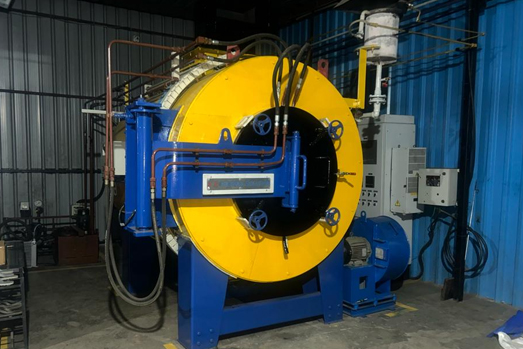
Low-pressure gas nitriding is a thermochemical heat treatment process that enhances the surface properties of metal components by diffusing nitrogen into the material at reduced pressure. This process, typically performed at temperatures between 500-570°C and pressures around 300 mbar, results in a hardened surface layer with improved wear resistance, fatigue life, and corrosion resistance. The reduced pressure facilitates better gas exchange and a more uniform nitride layer formation.
Review from our clients
Lorem ipsum dolor sit amet, consectetur adipiscing elit, sed do eius mod
tempor incididunt ut labore et dolore magna aliqua.
Best Consulting Firm
Neque porro quisquam est, qui dolorem ipsum quia dolor sit amet, consectetur, adipisci velit, sed quia non numquam eius modi tempora incidu laboreetde magnam aliquam quaerat voluptatem.
Alexa Reid
Synopsis
Nice People
Neque porro quisquam est, qui dolorem ipsum quia dolor sit amet, consectetur, adipisci velit, sed quia non numquam eius modi tempora incidu laboreetde magnam aliquam quaerat voluptatem.
Alva Goldhammer
Synopsis
Nice People
Neque porro quisquam est, qui dolorem ipsum quia dolor sit amet, consectetur, adipisci velit, sed quia non numquam eius modi tempora incidu laboreetde magnam aliquam quaerat voluptatem.
Alva Goldhammer
Synopsis
Nice People
Neque porro quisquam est, qui dolorem ipsum quia dolor sit amet, consectetur, adipisci velit, sed quia non numquam eius modi tempora incidu laboreetde magnam aliquam quaerat voluptatem.
Adam McDonald
Synopsis
Process Overview
Low-pressure gas nitriding involves introducing a nitrogen-rich gas (often ammonia) into a furnace under controlled pressure. The heat treatment process causes the gas to decompose, releasing atomic nitrogen that diffuses into the surface of the workpiece. This diffusion process creates a compound layer (typically consisting of iron nitrides like ε and γ’) and a diffusion layer beneath it. The diffusion layer is crucial for enhancing the mechanical properties of the treated component.
Key Parameters
Temperature:
Typically 500-570°C, chosen to balance diffusion rates and prevent unwanted phase transformations.
Pressure:
Maintained at around 300 mbar, significantly lower than atmospheric pressure, which improves gas exchange and uniformity.
Gas Composition:
Ammonia (NH3) is a common source of nitrogen, and other gases like hydrogen may be added to control the nitriding potential.
Time:
The duration of the process is carefully controlled to achieve the desired layer thickness and properties.
Advantages of Low-Pressure Nitriding
Improved Wear Resistance:
The hardened surface layer significantly increases the component’s resistance to wear and abrasion.
Enhanced Fatigue Life:
Nitriding can improve the fatigue strength of the material by introducing compressive stresses in the surface layer.
Increased Corrosion Resistance:
The nitrided layer can provide a barrier against corrosive environments, enhancing the component’s resistance to corrosion.
Reduced Distortion:
The lower processing temperature compared to other heat treatment processes minimizes distortion and dimensional changes in the workpiece.
Homogeneous Layer Formation:
The reduced pressure facilitates a more uniform diffusion of nitrogen, resulting in a consistent nitride layer across the component’s surface.
Applications
Low-pressure nitriding is widely used in various industries where enhanced surface properties are crucial, including:
Medical: Implants, surgical instruments.
Aerospace: Engine components, turbine blades.
Automotive: Gears, camshafts, crankshafts.
Tooling: Dies, molds, cutting tools.
General Engineering: Components subjected to high loads and wear.